Showing posts with label HPC strategy. Show all posts

Thursday, July 7, 2011

Opinion: A bad strategy for i2basque

Today we have known that i2Basque academic computing centre is giving away 20% of its computing power just for joining the spanish supercomputing network.

I suggested -me personally- that this was not the right way to go a few months back. Why ? because it is adopting the old-fashion supercomputing scheme of submit-application, four months to run and a fill out the forms again. Ah! and cite us in your paper (?). A bunch of senseless paperwork for academics who want to do research not paperwork.

I am sorry to say, serious researchers need more than 4 months. Just compiling on a new architecture is a nightmare -it is not the same ppc than intel than bluegene. Accounting for compute hours will never be precise. And having a system fragmented to bring some users from one site to another, where the support teams are not close to them is another huge mistake. Users want to be close to the technicians, visit them, see them interact as much as possible. They dont want to travel hours to bring their data, or work with a guy who is help them compile. That does not work, it is not efficient. But it is politically correct as this adds up to the petaflops that somebody claims to manage. False. It only creates a 'network' of scientists wasting money on trains, planes and buses and hotels. Great.

There is an obvious reason to this. The previous team who managed i2basque has been politically rebuilt in order to join a strategy which is not theirs. That cluster, the one they are going to split, is 95% full already, and that only using it for our own existing projects. The politics who decided that i2basque was going to be part of that network they do it just to show off, but it probably does not take into account the users. Unfortunately the new i2basque is being out-computed to favour other alternatives external to our scientists. People who do not want a real grid and free to compete network. Hey but that is the old supercomputing lobby.

Hopefully a new local government will change things when the elections come.

Disclaimer: This just represents my opinion and nobody else's. I am not linked to any of these organizations.

Wednesday, April 27, 2011

top500 bubble burst

The bubble is bursting, that is for sure. We are facing a tremendous downturn. Governments are making cuts and cuts. And I shall remember that many countries in very difficult situations have stop announcing new speed improvements/new machines/etc.

It makes sense. Jack Dongarra states that he would not like to make policy based on only one number. He is right. Unfortunately much of the spanish science policy has been exactly that: THAT number for the last years and for a lot of another number : €s. That policy in which infrastructure accumulation equals science output. That childish behaviour in which more high--end and future computing commodities mean better. That kiddies behaviour by which I have more I rule my micro-world. Probably FALSE. Probably it is a cultural problem rather than a rigorous science policy.

This is exactly the point that is different on the Basque Science and Industry System -IMHO. The Basque Country is using HPC in a more modest and strategic way. That is a way that is not in the lists, and it does not mind.

Ey! but that is my humble opinion. Worst case is 'someone' will 'pull some strings' to knock this 'stupid' blog-writer down. If they are not ready to read this, then they are not ready to dictate science. I feel sorry that other regions in Spain have wasted my taxes on more rather than better.

Wednesday, December 22, 2010

Basque Firm Progenika sources Wikileaks' US critical listed firm Grifols


As per indicated here the agreement is:

"Basque biotechnology company Progenika Biopharma, specialised in the development of personal medicine technology, has granted Grifols exclusive worldwide distribution rights for its BLOODchip® molecular biology product."

"For Victor Grifols, President and CEO of Grifols “this agreement will allow us to strengthen our Diagnostic Division and consolidate our global position in the field of blood grouping with a new innovative tool that increases transfusion safety.”


Grifols was recently listed as part of the Critical Foreign Dependencies Initiative revelated by Wikileaks.

Thursday, November 11, 2010

Learning from others

The Victorian life sciences computation iniative could be a good example for the Basque bioregion. One of their key problems is that there is a lot of duplication of resources and personel, what increases cost.
The center is forming, but I believe it is quite important to understand their case, as we are quite similar with this Australian region.
  • to strengthen the outstanding life sciences reputation and capability of Victorian institutions and researchers
  • to make significant investment in high performance computing facilities and research support services
However I would never follow a classic supercomputing center model. The model is old, and probably useless. What I always talk about, is specialization, top quality management and operation strategy. A supercomputing per se is void.

The previous web page provides details and comprehensive information.

Intelligent Systems Group

This group, based at the Computer Science Faculty of University of the Basque Country in San Sebastian, combines what in essence is the root of success for many well known online businesses. Their activities are right now concentrated on:

INTELLIGENT DATA ANALYSIS

  • Bayesian Networks, specially for supervised classification
  • Clustering techniques
  • Data mining, machine learning and knowledge discovery from databases, in general
  • Feature Subset Selection in Machine Learning
  • Statistical Methods for data analysis

Optimization

  • Genetic Algorithms
  • Estimation of Distribution Algorithms (EDA)

Applications

  • Biomedical domains. Data modelization for diagnosis and prognosis problems.
  • Bioinformatics. Biomarker discovery.
  • Oceanographic domains. Ecologycal domains.

High-performace computing

  • Parallel implementation of techniques developed or used at ISG
  • Parallel computing hardware
  • Interconnection networks
  • Grid computing
  • Application of machine learning and optimization techniques to scheduling mechanisms
Update 11th Nov 2010. Researchers willing to join these teams or others in the Basque Country, should apply to Ikerbasque. Next call is due end of 2010 to start in 2011.

Monday, November 1, 2010

Food for HPC thought

I am happy with the changes for i2Basque -the fact that is going to be integrated with Ikerbasque, and by the way I hope that the excelent team stays beyond 2011-. I have seen many new HPC centers fail on something that Ikerbasque does very well: partnership with each research institution in the Basque arena. And we can say they have been quite successful.

Because the major failure of new supercomputing centers is that they can not do science: they do not publish, or at least not enough. However they were aimed for that! yeah but the reality is that without people, without ideas, without real scientific centers behind, they are nothing but an empty box, rented to other scientists and normally badly managed as their directors are researchers that have to stop their research to manage -so why the hell do we have management gradutes for?-. I have always argued this, and I still believe that supercomputing centers as such are a very old void idea nowadays. As an example, I have heard that some of the new ones have operated for a few years without having managed to get access to online publication services :from the universities that use their own systems!- ... We need more focus science and better service.

Having said this: what can these centers offer or improve ? Definetely service. It is unsound that nowadays, when most of researchers need less than 512 cores, there is so much burochracy to request a few hours, for a few months. This is unfortunately becoming a major problem as most of their codes will end up running on in-house facilities: no paperwork, no timeframe. That is why new supercomputing centers still fail, because service is conceived as if there was going to be huge runs inside their systems (>10,000 cpus or TBs of memory). But that is not practical, and due to the huge shifts in computer technology prices/performance, this is not sustainable in the present economic environment. Big clusters are for big projects. Lets say that nowadays a cost-effective system is built upon a few thousands (4-k) cpus.

But my point today is service and computer systems research. These two are my wishes for the new i2basque. Top quality service (be inside EJIE is the first step, so congrats for that), top quality systems, 24*7 if needed, top quality code support team, good helpdesk and more importantly happy and passionate employees -lets stop the HPC cowboys forever, please-. On the other side, i2Basque has one potential that can not be ignored. There should be some sort of commitment to pure systems research. What is more, what is the science debt clock with the Linux Kernel itself ? How long will this run for ? How many of our science projects would not exist without it ? For how long supercomputing centers are not going to commit patches and updates to the Linux Kernel ?

Sunday, October 24, 2010

References: the LRZ case

The following slides -from a presentation given a few months ago- highlight perfectly what I consider a very good global HPC academic provider. It is what we should be looking at, and mimic -as we already explained, what I believe could be applied to Lemoniz abandoned nuclear power plant.

Introducing IT Service Management at the LRZ


However let me argue the real need to be supported by Industry, specially the local one. Lemoniz is extremely important in terms of Physical Security, but there is more that I will try to argue in future posts. All related posts here.

Basque Competitiviness Performance: Why should your HPC project be in the Basque Country?

The following presentation -prepared by distinguished professor Michael E. Porter from Harvard Business School's Institute for Strategy and Competitiviness- will give provide you with some unvaluable insights. The professors used this material to give a talk in Bilbao in 2002, and describes the evolution of the Basque Region strategies and recommendations from 1988.

Basque competitive performance - Michael E. Porter

Saturday, October 23, 2010

Fellowships 2011 for Visiting Researchers in Computational Projects


The call is run by Ikerbasque the Basque Science Foundation: please see a description of centers, projects and conditions here.

Friday, August 20, 2010

Understanding the 'client'

I already talked about the Basque Centre on Cognition Brain and Language. I wanted to post this video because I believe it is extremely important to understant the people that need HPC tools. And this, this is really unique. I believe we can all say the centre has very good and qualified professionals.


well done local government, very well done.

Wednesday, August 4, 2010

All-Together

This is my personal objective from this blog. To be one, here in the Basque, so that research and technology centres and institute work together to minimize their computing costs and multiply their opportunities.

I try to highlight what I find it is good and what I believe could be improved.

And it is extremely interesting, because the users are not those that appears on the press every now and then. There are small, little and sincere initiatives. However they must believe that united and sharing one soul, they will be able to achieve higher successes. Government must help and entities must share.

Yes we can.

;-)

Thursday, March 25, 2010

DIcotomies

When having drinks with my work-fellas we always come to the same question: HPC centers or Science/Industry labs with HPC resources.

The unexistence of either does not mean the unexistance of the other.

What is more appropriate ?

We naturally lead the conversation to US specialized labs: LLNL, Oak Ridge, and other sound names. It seems normal to see HPC resources and research in there.

If we look at HPC centres and specially in the newly-iesh ones, there is always a tremendous lack of the science itself. But they are ruled by scientist and try to do science, however the machine is the excuse. So ... what ?

From my point of view both perspectives could work. And both have their own problematic. I think it is more about the willingness first of the governments, to create such centres with clear objectives, under clear scientific policies with long term ambitious goals. Second of the managers: unfortunately public sector always suffers from this problem.

My point of view, is that if you want to start servicing HPC you need to operate like one of the big private ones: operations, project management, service, availability and excel in expertise. Here I see clearly MSc in Ops Management, Comp Sci, Telco, Data Centre and MBA specifically in telecom. I dont see any science there.

The challenge, the x to solve, is ... how do we mix that with science ? and industry ? any relevant example ?

Monday, February 22, 2010

National Service ?

I agree with the point that says HPC services will be free of charge for "significant" researchers of our nation. What ... what about those SMEs or even national corporations ? why are they out ?


Could there not be a panel of experts to evaluate the impact in our society (workforce to create, quality of jobs, really new techologies -aerospace, materials- .... ) and the government be paying for the electricity bill and secure resources with a nice uptime ?

It is kind of illogical not to support who is going to help most the country. I am not saying that the HPC service should be only for industry, but clearly our companies could do better if they did not have to pay for cpu/hour for a "regular" service. Obviously they will go for commodities until they get an unaffordable electricity bill!

Update 26th Feb '10

I forgot to mention the closely related to this
project SPRI (Basque Development Agency) wanted
to promote Grid-Computing Projects within the SMEs.
Well a consolidated HPC management for Biz and Research
could give an answer to this proposal we have never heard
of again.

Tuesday, December 15, 2009

Personnel: Critical Success Factors


"Management of such machines is sometimes highly specialized. Presently all these people work in different locations in small centres of companies and in groups of no more than two: we need to make these people share information, experience and educate them well."

Saturday, December 12, 2009

Data Center as Critical Success Factor

"Small and Medium Companies, Universities, Government and Research Centres and Companies should create a shared datacenter and working areas."

The datacentre is the kick-off HPC infrastructure. It is as critical as building a road or connecting with high speed trains or airplanes. We should stop creating small, unsafe, dangerous and unproperly PUE-ed small datacentre desings: it is time to consolidate and securize such infrastructures around the basque area. It is time to create a building infrastructure able to provide uptime, power, security at all leves, for all the science, enterprise, industry and educational actors. It is time to consolidate and build something useful and safe. The start of a HPC-Hub could be Lemoniz: better that it may seen as I already said in another post. Nevertheless I want to introduce here another good practice from Europe. Germany what a suprise.

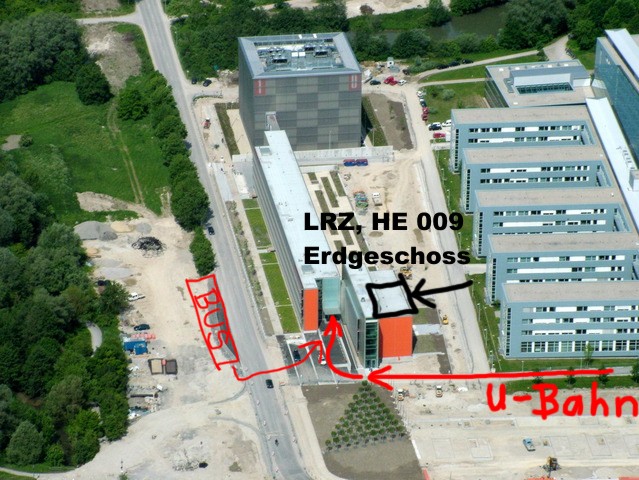
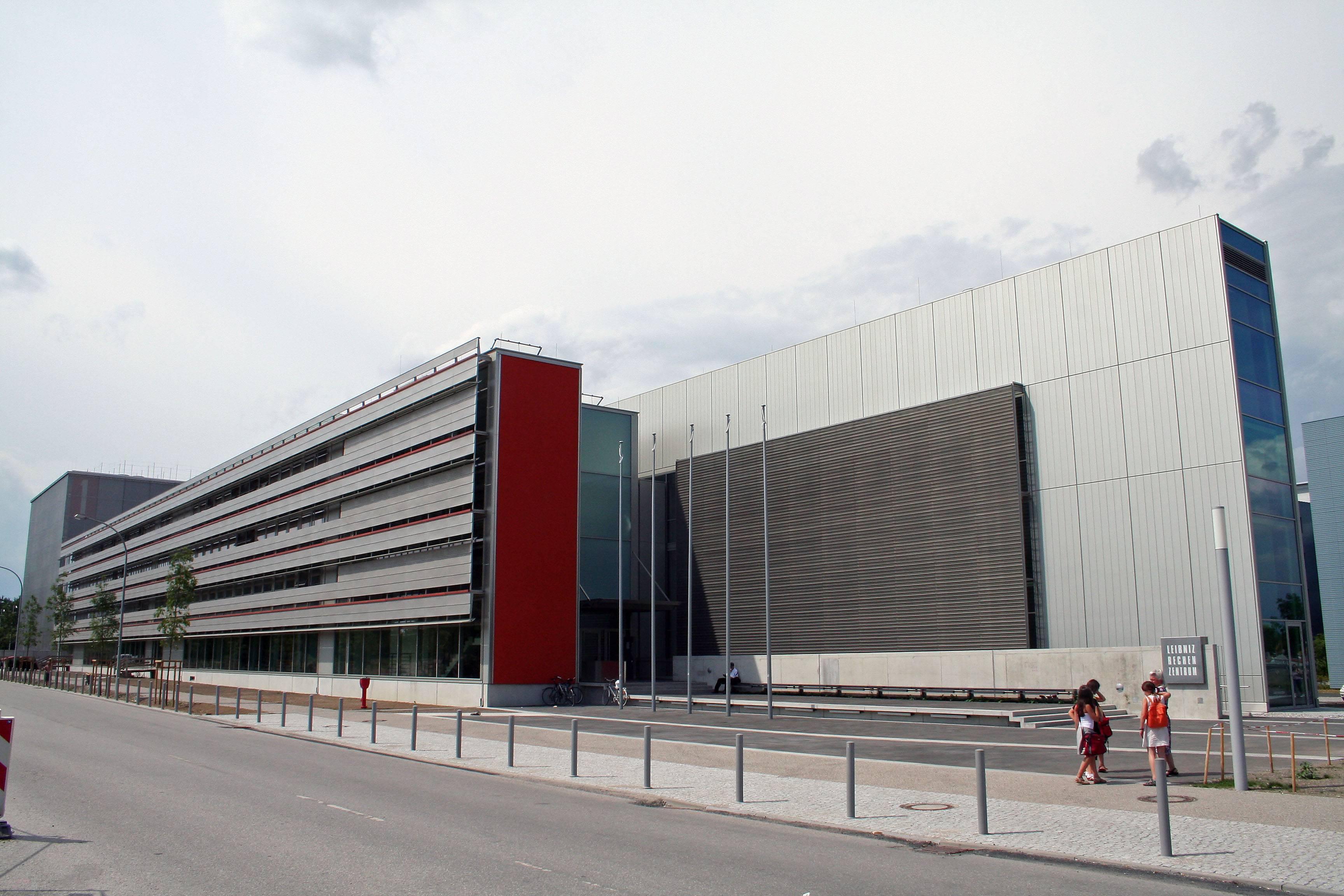
The pictures show one of my favourites datacentres design the LRZ.


Here are the building offices and the impressive cube at the end is the datacentre itself. Each floor in there is a level of service. Elevators at the sides, stairs, from bottom to top each floor is one service: water and cooling, networking, power, backup and machine room at the top room, a space without columns (see the last picture). Impresive well design. The building includes a control room kinda space control room. Others datacentres in Europe also include such infrastructure.


Wednesday, December 9, 2009

Ideas for the future ...


If created, such centre would need to be funded in previously existing partnership with Industry. That is the key.

Sunday, December 6, 2009

Brain Drain


An HPC centre will never exist in the Basque if we keep exporting PhD graduates, due to a lack of national strategy. HPC was labeled as strategic for US industry: why is it not for the Basque ?

Tuesday, November 3, 2009

Networking is Great

Happy to read that three Basque research centers Tecnalia, The University of the Basque Country and BCAM have celebrated a joint workshop. These three are already known for dealing or creating home-grown HPC software and it is great that they met "with the intended to enhance and foster cooperation between these different groups and promote their interaction as agents of the R+D+i system in the Basque Country".

The Basque still needs a coordinated management of HPC resources and specific computational expertise grouped, although it seems that this is meeting goes into the right direction, as no HPC center can grow without relevant users.

Text Available here.

Saturday, January 31, 2009

Open Proposals (Part I)

The team in charge of the infrastructure management should be something else: The department should be an applied Laboratory to develop and test softwares and where there is real transference of technology to society and centers under open source licenses. A place where learning, experimenting and taking care of the people that run the service is the most important.

Therefore and as the Basque Government has done in other centers, firstly is very important to find a leader that faced both research and industry technology transference and with deep knowledge of HPC. Somebody honest and willing to cooperate in a Team where his/her name is the last thing to appear.

Tuesday, January 27, 2009

Learning from Others (Part II)

Most public HPC centers would offer free computational resources to research institutions: this makes sense as a way of concentrating the expenses that unlinked small and replicated computing resources across universities make. It is a good way of sharing resources efficiently. Makes sense.

Private sector can also join; but paying per storage and cpu-usage. And that has no sense for the national companies: they pay taxes and have to pay for using the national computing resources as well. And their impact in local economy can be equally compared to the impact that research has for the national scientific community.

They have to pay twice and usually HPC centers can not guarantee a top-class security of their industrial data or a 24x7 operations.

Once more, public managers should review its policies and be a real impulse to our industry -and stop making marketing with fake headlines.